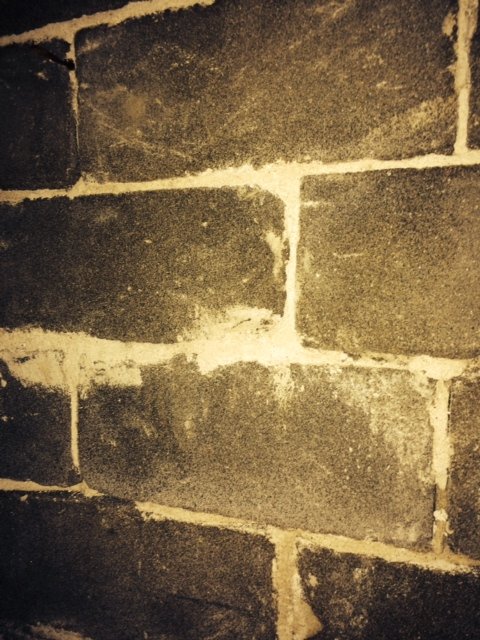
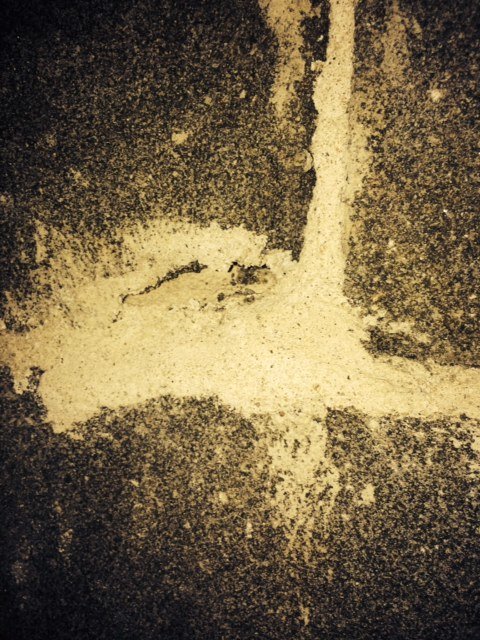
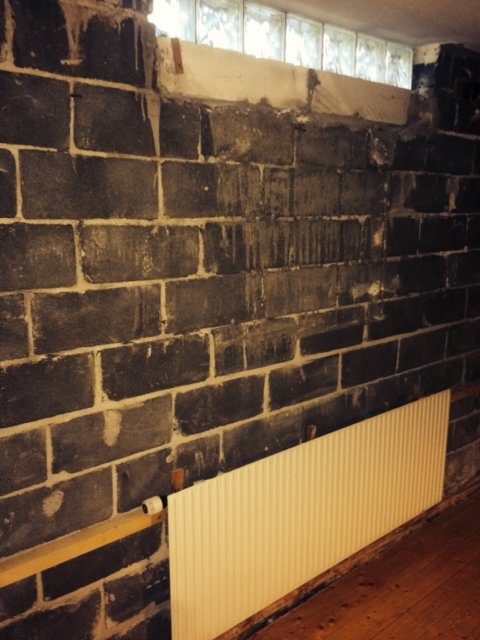
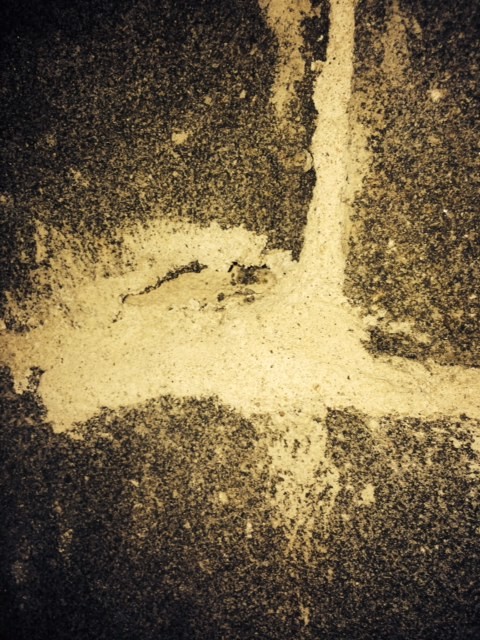
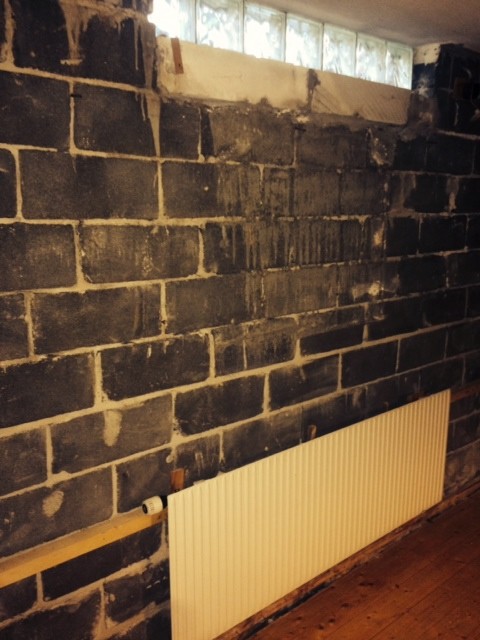
Hello, we have torn down the panel in our 70s house's basement following the advice of the inspector at purchase. Pine paneling with insulation directly against the masonry exterior wall in the souterrain is indeed a significant moisture risk, so of course, it had to be removed. It turned out the wall wasn't particularly damp, except for the mortar sporadically. The question now is how big a risk it is that asbestos was mixed in the mortar? How can you determine this, should we send it for analysis? I can't see the purpose of mixing asbestos in the mortar other than it being done at the time the house was built, according to some local construction companies. The plan for the wall is to lightly plaster while keeping the brick pattern and paint everything in a graphite gray color with slightly lighter mortar. The wall is about 2.4 x 5 meters, what might the cost be to subcontract this work, assuming there is no asbestos needing remediation associated with the work? Is the white growth in the mortar efflorescence?
It is extremely uncommon for asbestos to have been added to regular mortar. I don't think it has ever been done for typical bricklaying.
Asbestos was present in tile adhesive at that time, I believe it was there to create greater elasticity, less risk of cracking, etc. There have been instances where asbestos was added to mortar, and I think it's in cases where the mortar was used as tile adhesive or similar.
In regular bricklaying, mortar without asbestos has been used successfully for hundreds of years, there is no reason to start adding it even during the height of asbestos usage.
I have worked as an asbestos remover and have never heard of anyone encountering asbestos in regular mortar. Fix and mortar, on the other hand, were more the rule than the exception.
I don't see any fungus or calcium deposits, I think they smeared the mortar a bit carelessly in and around the joints, because the wall was supposed to be covered with a panel.
Even if there were asbestos in the mortar, why would you need to remediate if you're going to plaster and paint the wall anyway?
Right, I didn't even think along those lines. As mentioned, even if the wall were packed with asbestos-containing material, it wouldn't matter if it's going to be encapsulated with plaster and paint.
Right, I didn't even think in those terms. As mentioned, even if the wall is packed with asbestos-containing material, it doesn't matter if it's going to be encapsulated with plaster and paint anyway.
Yes, the wall is fairly uneven because they slapped on mortar haphazardly. So if they are going to smooth it out and there is asbestos (but from what I understand from the answers here, it seems very unlikely), it will spread in the living environment and that's not good in that case. So maybe not remediate, but at least ensure that it doesn't spread during the work?
You can be sure that there is no asbestos there, I have never either read or heard about asbestos in mortar.
Making sure it doesn't dust when you sand is probably the best approach always!
Rent a proper machine with a vacuum cleaner attached-
The basement in my house (late 60s) has a layer of cement slurrying/plaster on the walls in all rooms, where the cement plaster contains asbestos. Likely, the mason mixed it on-site when he did the job.
It used to be mixed into mortar, to what extent I do not know. So take samples before processing it in any way.
It was interesting. I assume you have had it analyzed? It's not that you happened to have analyzed mortar that ended up on an old tile installation? Meaning that the plaster has been "contaminated" by old tile adhesive?
What about the wall blocks in question, they don't necessarily contain asbestos, there are other insidious materials from that time. We need to look at the whole risk environment here, it's a shame with just asbestos in the threads.
That was interesting. I guess you had it analyzed? It's not that you happened to get plaster analyzed that ended up on an old tile setting? Meaning that the plaster mix has been "contaminated" by old tile adhesive?
This plaster was not laid on tiles, but it seems to have been applied as a leveling surface directly on brickwork concrete on the wall. A roughly 5mm thick layer of cement. Original drawings and building specifications mention "cement slamming" of the basement walls.
And yes, I sent samples for analysis. It so happened that I initially sent samples from glue and carpet remnants from the rooms in the basement (before renovation and new flooring), lab samples showed asbestos in only one of the rooms, which was very strange as it was the same carpet in all other rooms.
It then occurred to me that the plaster on the wall in the room with the positive lab result had moisture damage and had visibly fallen into crumbs and dust on the floor where I took the sample from the carpet. I then suspected that plaster might have been included in the analysis sample I sent and that it was the plaster that was asbestos-containing and not the carpet/glue.
I subsequently sent analysis samples of plaster from walls in all basement rooms, and the test results showed asbestos in all samples. I must say I was surprised by this finding. But it seems that they mixed asbestos in anything just because they could in the past.
Even mortar, as I said, regardless of how common/uncommon it may have been.
The asbestos remover I mentioned this to said that it was common for craftsmen to have bags of asbestos with them, to be able to mix on-site for a variety of purposes. In my case, it was the mason.
I have not analyzed concrete floors and other things in the basement, but it wouldn't surprise me if the mason used asbestos in other things as well.
How about the wall blocks in question, they don't have to contain asbestos; there are other insidious materials from that time. We need to look at the entire risk environment here, it's a shame to only have asbestos in the threads.
Interesting. Besides blåbetong, what else can be "insidious"?
It probably exists in the same spirit as asbestos could be added here and there, many industrial slag products that acted as ballast in such blocks. But apart from the radioactive part, they might be considered so bound that they pose no danger at all, but surely individual parts could have higher concentrations and then similarly be released during processing, demolition, etc.
Vi vill skicka notiser för ämnen du bevakar och händelser som berör dig.