Yes, as the question implies. After much consideration, we're going to convert from crawl space to slab.
I'm wondering how difficult it is to do it at all and how difficult it is to keep up with the concrete pump.
The concrete should not be visible but, of course, as even as possible. The surfaces are about 55 square meters divided into about 5 areas of different sizes.
I am reasonably skilled in construction generally but have not worked with concrete before. Could it make sense to try to get hold of a builder who can?
I have no experience converting a torpargrund to a slab. But I have poured many slabs and walls, etc. It's not a problem to keep up with the pump as they can control the speed and even stop pumping if you feel it's starting to go too fast. However, it's a tough job to drag the hose when it's full of concrete, so it's good to have a few people to help pull it around. It's also beneficial if you can get help from someone with some experience in pouring when it's time for that. Even though it's not rocket science, it helps to have someone knowledgeable, especially if something starts to go wrong during the pouring.
Cottager to slab. How do you intend it to work, the current house is probably on a foundation wall or pillars, should it just be concrete between the wall/pillars or. If so, should the house remain on its old foundation..
I have no experience converting a "torpargrund" to a slab. But I have poured many slabs and walls, etc. There is no problem keeping up with the pump because they can control the speed and even stop pumping if it starts going too fast. However, it's a hell of a job to drag the hose when it's full of concrete, so it's good to have a few people to help out with that. It's also good if you can get help from someone with a bit of experience in pouring when the time comes. Even though it's not rocket science, it is an advantage to have someone who knows what's going on, especially if things start to go wrong during the pouring.
So as I understood it, I thought the pump truck also distributed the concrete. But it's perhaps not entirely clear... so finding two guys who know what they're doing might be a good idea...
Yes, that's exactly what I thought too. I have an acquaintance who has worked with concrete but doesn't want to handle the pouring itself, so I'm thinking I can get good tips from there.
Cottage to slab. How are you planning for it to work, the current house probably stands on a foundation wall or pillars, will it just be concrete between the wall/pillars or. If so, will the house remain on its old foundation..
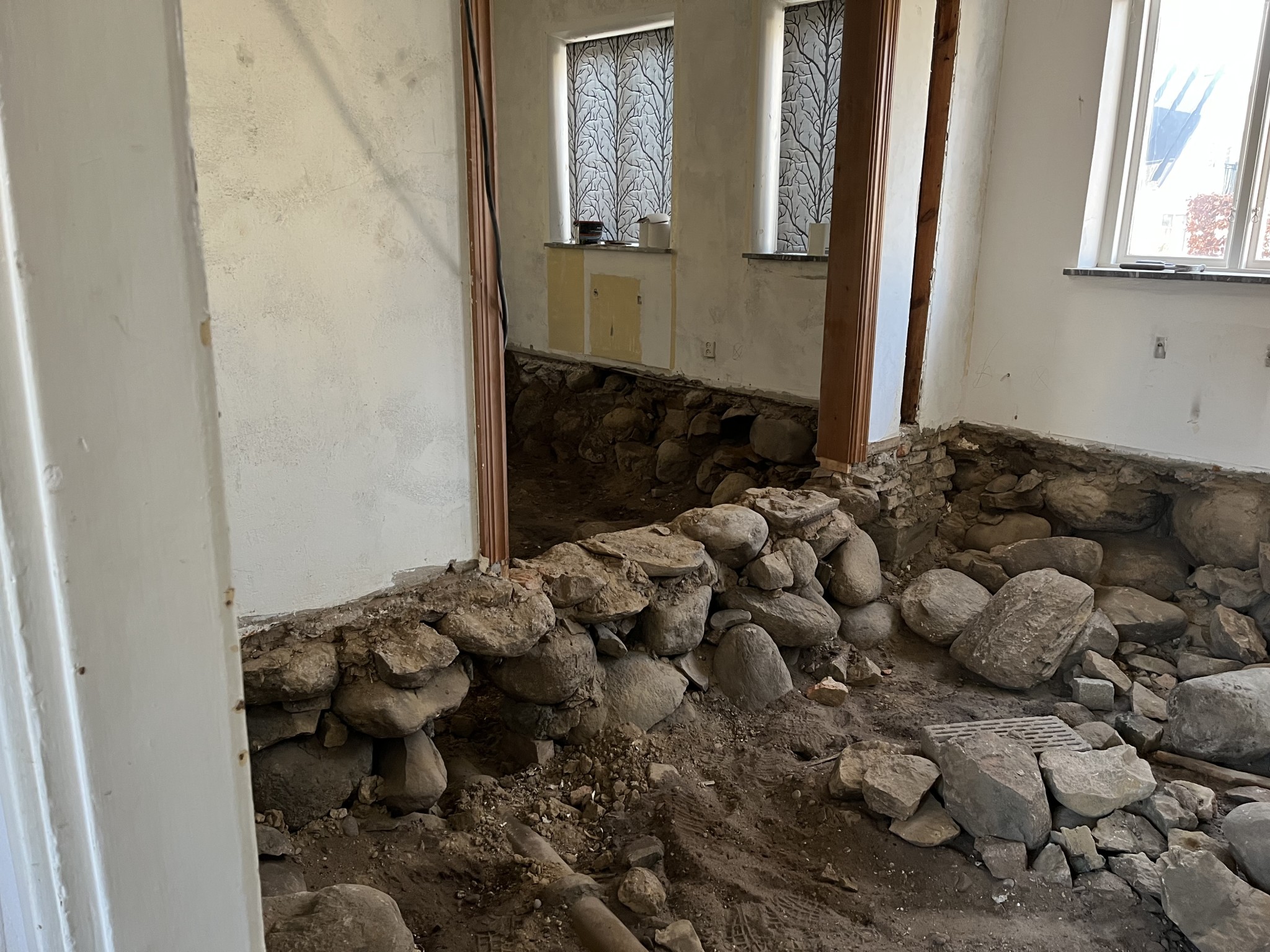
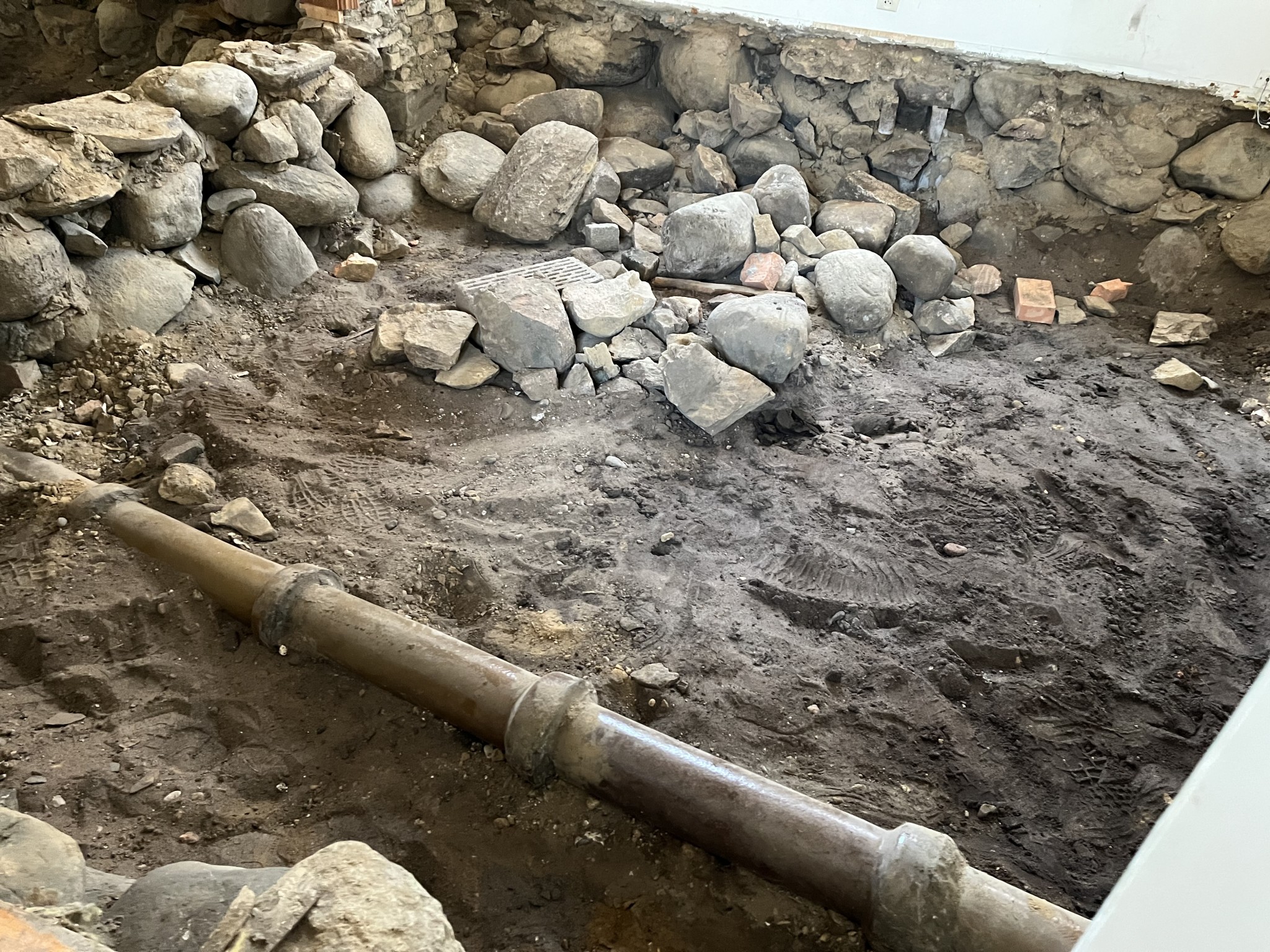
It is indeed standing on a foundation wall with something like granite blocks or whatever you call it. Each room is also divided onto blocks down into the foundation. So the casting will be a bit room by room but open in the doorways so to speak. The idea is to place insulation against the foundation wall and the ground to minimize thermal bridges.
What do you mean by concrete between wall/pillars?
It is indeed on a foundation wall with something like granite blocks, or whatever you call it. All the rooms are also divided into blocks down into the foundation. So the casting will be room by room but open in the doorways so to speak. The idea is to place insulation against the foundation wall and the ground to minimize thermal bridges.
what do you mean by concrete between wall/posts?
Reading with interest. I am also going to cast most of an old Skåne farmhouse. How are you planning to deal with the uneven foundation wall and the cell plastic, and how do you insulate between the concrete slab and the wall/foundation wall to avoid a thermal bridge?
Reading with interest. I will also be casting again most of an old Skånelänga. How do you plan to handle between the uneven foundation wall and the EPS, and how do you insulate between the concrete slab and wall/foundation to avoid a thermal bridge?
It looks exactly like that here too. I plan to place idoler boards against the foundation wall and pour concrete outside to strengthen between the stones in the foundation wall. Then insulate with about 30 cm of insulation.
Sorry for the late reply
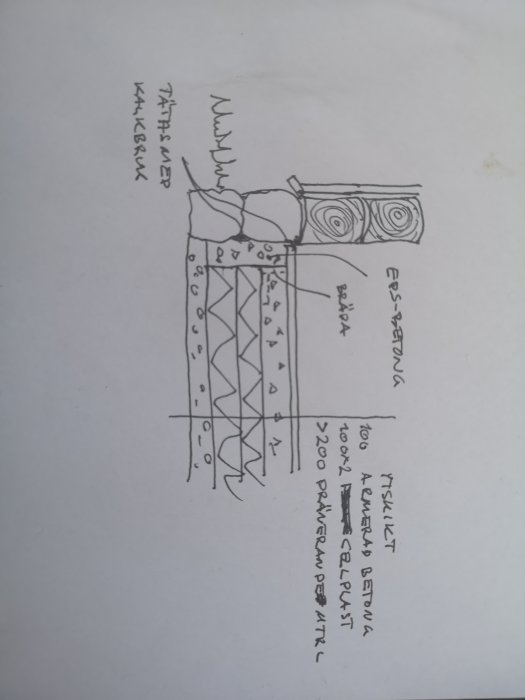
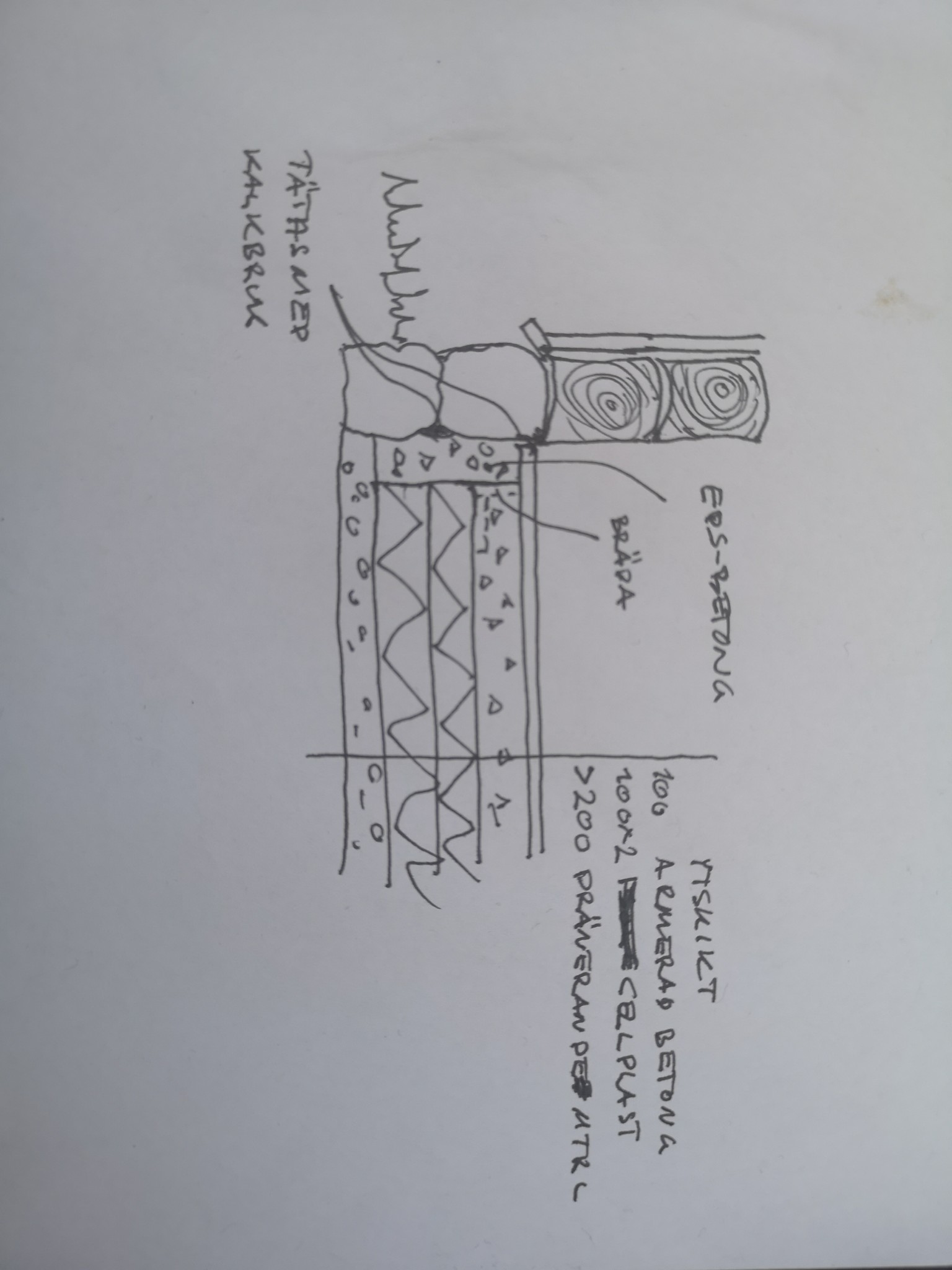
Excavate. Fill with drainage material (gravel or capillary-breaking Leca balls). Lay out insulation boards, secure the boards so they don't slide with intended plastic spikes. Find the right distance from the foundation stones with the boards, some stones that point far into the foundation may need to be chipped off. Build a frame of planks as high as the concrete slab. Secure with support behind. Fill between the slab/insulation with either Leca balls, finish with 10 cm EPS concrete (economical version) or fill with EPS concrete all the way. EPS concrete breaks the thermal bridge and supports the finished floor. Reinforce and cast the concrete slab, with or without heating coils.
If you want solid wood flooring, make sure to get an even surface on the concrete so you can lay 15 mm tongue-and-groove plywood to screw the solid wood flooring into.
Sorry for the late response
[image]
Excavate. Fill with drainage material (gravel or capillary-breaking Leca balls). Lay out insulation boards, secure the boards with intended plastic nails to prevent slipping. Find the right distance from the foundation stones with the boards; if some stones point far into the foundation, they can be cut off. Build a frame of boards as high as the concrete slab. Secure with support behind. Fill between the slab/insulation with either Leca balls, finish with 10 cm EPS concrete (economical option), or fill with EPS concrete all the way. EPS concrete breaks the thermal bridge and supports the finished floor. Reinforce and cast the concrete slab, with or without heating coils.
If you want solid wood flooring, make sure to get a smooth surface on the concrete so you can lay 15 mm tongue and groove plywood to screw the solid wood floor into.
Thank you very much for the great sketch and well-written response. We will probably use Leca balls for our part.
Thank you very much for the great sketch and well-written response. We'll probably go for lekakulor.
Just make sure to get Lecakulor that have a K after them, meaning they are capillary-breaking.
You can make cheaper EPS yourself if you find cheap styrofoam balls that you mix with fine concrete.
Just keep in mind to get Lecakulor that have a K after them, meaning they are capillary-breaking. You can make your own cheaper EPS if you find inexpensive styrofoam balls to mix with fine concrete.
Thanks for a nice drawing. I've had a bit of time to look at it now and there are some questions about it.
Do you use lime mortar in the foundation wall to hold the stone blocks in place? Not concrete there?
Why is there a vertical board at the top between the concrete layers? If you understand what I mean.
thank you for a fine drawing. I've had some time to look at it and there are a few questions about it.
Do you put the lime mortar in the foundation wall to hold the stone blocks in place? Not concrete there?
Why do you have an upright board at the top between the concrete layers? If you understand what I mean.
Sorry for the late reply.
The board is just a casting mold for the EPS. Then you remove it and the cast concrete slab.
You seal the outer wall with lime mortar. This is because concrete doesn't move, so it cracks more and comes loose.
Vi vill skicka notiser för ämnen du bevakar och händelser som berör dig.


Dr Benz said:
It is indeed on a foundation wall with something like granite blocks, or whatever you call it. All the rooms are also divided into blocks down into the foundation. So the casting will be room by room but open in the doorways so to speak. The idea is to place insulation against the foundation wall and the ground to minimize thermal bridges.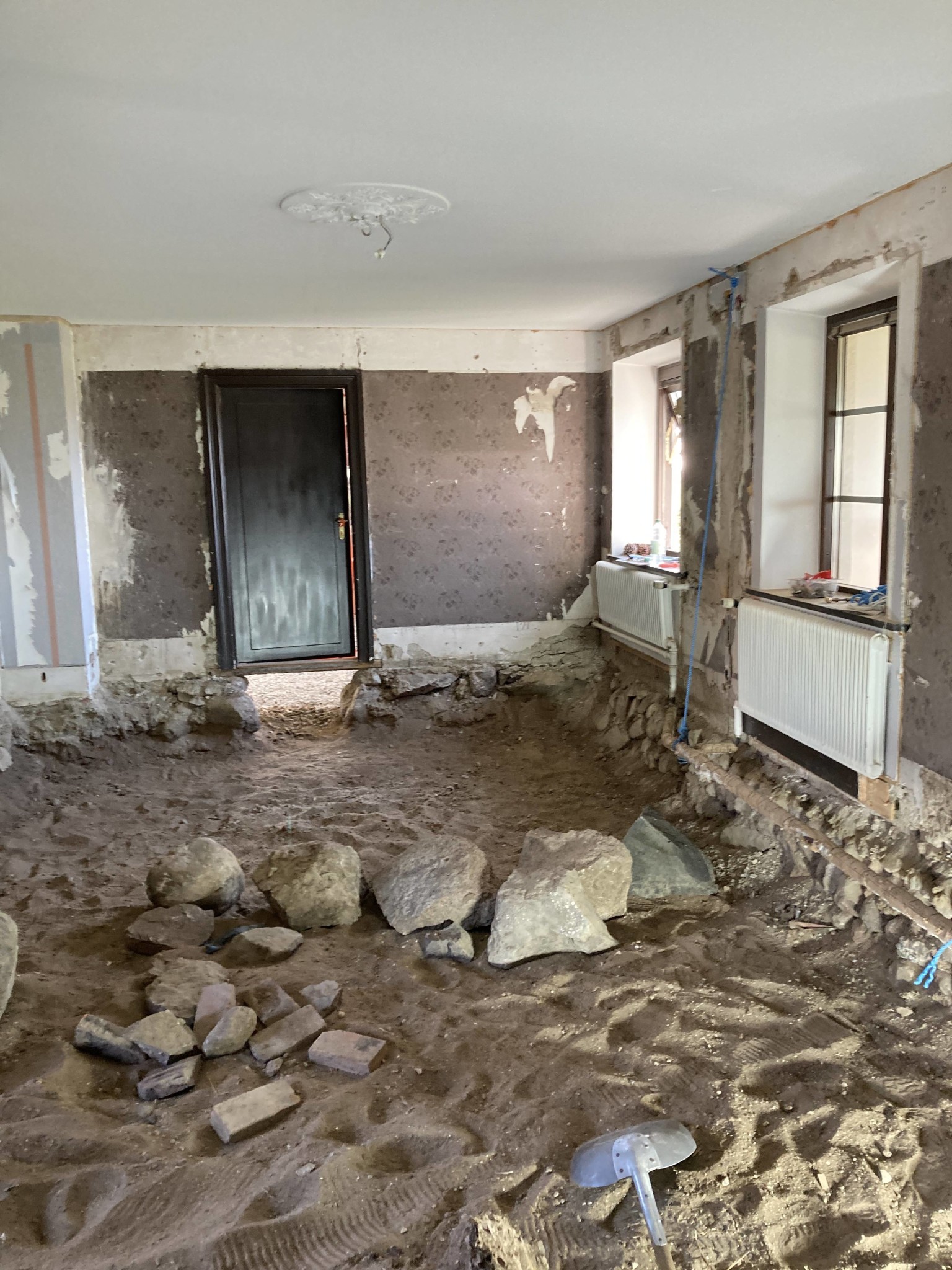
FreQa said:
Sorry for the late response